
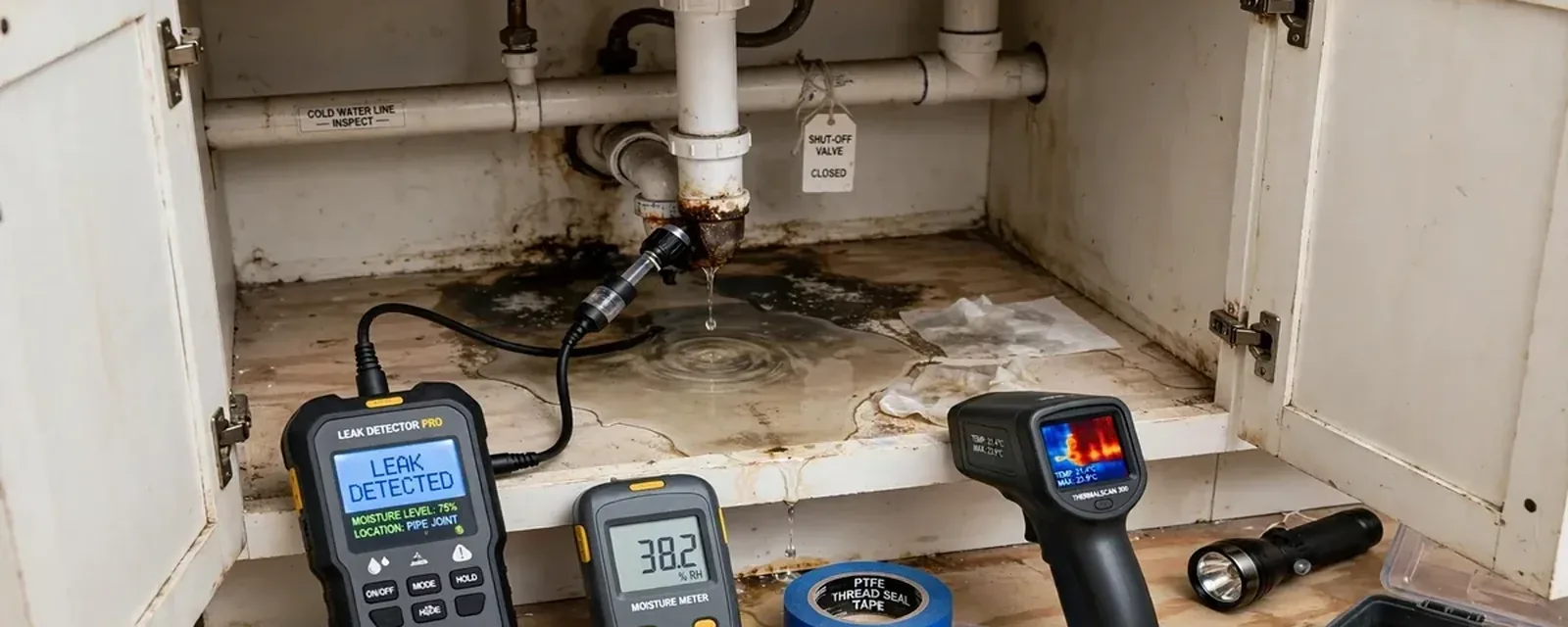
Why detection comes before digging
A buried water line can run for dozens of feet between the meter and the house. If you dig without knowing where the leak is, you pay for a long trench and may still miss it. Detection narrows the search to a small spot, so the dig is short and targeted.
The savings are real. A pinpointed repair means less trench, less restoration and less time without water.
Signs of an underground leak
These clues often point to a buried line.
- The meter keeps moving after every fixture is off.
- Your water bill rises without a change in how you live.
- A wet, soft or unusually green patch of lawn.
- Water seeping at the curb, sidewalk or driveway edge.
- Low pressure throughout the house.
- The sound of running water when everything is off.
If you see these, close the main valve at the house and watch the meter.
Tools used to find a buried leak
No single tool works every time. We combine them.
| Method | What it detects | Limits |
|---|---|---|
| Meter test | Whether water is leaving the system | Does not give the location. |
| Acoustic listening | The sound of water escaping a pressurized pipe | Traffic and plumbing noise can interfere. |
| Ground microphone | Leak noise through soil | Works best on metal pipes. |
| Tracer gas | Gas escaping from a leak | Needs the line isolated. |
| Thermal imaging | Temperature change from hot leaks | Best for hot water lines. |
| Pipe locator | The path and depth of the line | Needs access to a metal pipe or tracer wire. |
Our leak detection page covers interior leaks too.
What changes the price
The location of the leak is the first factor. A leak near the house is quick to find. A leak near the street may take longer, especially if the line is deep.
The pipe material is next. Metal pipes carry sound well. Plastic pipes carry it poorly, so detection takes longer and may need tracer gas.
Access and conditions matter too. Pavement, wind, traffic and neighbors' plumbing all add noise. A quiet time, such as early morning, often improves results.
How a detection visit works
The goal is a marked spot, not a guess.
- Meter testWe confirm water is leaving the system and whether it is inside or outside.
- Trace the lineWe locate the path and depth of the buried pipe.
- Listen and testWe use listening gear and tracer gas as needed.
- Mark the spotWe paint or flag the leak location for the repair.
- Explain optionsWe explain repair methods, including trenchless options.
Who owns which part
The service line from the main to the house is generally split between the utility and the owner, with the meter or curb stop as a common dividing point. The exact line depends on the utility.
Before paying for a dig, call the Belleville Water Department at 973-450-3414 and ask where their responsibility ends. If the leak is on the utility side, they handle it.
Do not skip the high bill check
A high bill is not always a buried leak. A running toilet, a dripping faucet or a failed water heater valve can do the same. We check inside first, since it is quicker and cheaper.
If the meter test shows the leak is outside, we move to the yard. Our water line repair page describes what comes next.
Repair options once the leak is found
Once the leak is located, the repair can be a short open dig, a pipe-bursting replacement or a new line run in a different path. A short dig at a marked spot is usually the cheapest. Replacement makes sense when the line is old and likely to fail elsewhere.
Ask for both prices. If the line is lead or galvanized, replacing it avoids paying for a second dig later.
Keeping records for your insurer and utility
Save the meter readings, photos of the wet area and the written report. If the leak was on the utility side, the utility may adjust a bill. If it was on your side, your insurer may want the report. Keep receipts for detection and repair.
How accurate is pinpointing
A skilled technician can often mark a leak within a small area. Accuracy depends on pipe material, depth and background noise. A mark that is a foot or two wide is common. The dig then starts at the mark and opens as little as needed.
Preparing the property for a visit
Clear access to the water meter and the main shutoff. Mark or tell us about any buried items you know of, such as irrigation lines, old tanks or a pool line. Keep pets inside and move cars off the driveway if the line runs beneath it.
Quiet helps. Turn off the dishwasher, washer and any running fixtures, and ask neighbors to avoid heavy water use during the visit if you can.
Before any dig
Call 811 so gas, electric and other lines are marked. New Jersey's plumbing subcode adopts the National Standard Plumbing Code Illustrated, 2021 edition, through N.J.A.C. 5:23-3.15. Any replacement service pipe must meet it.
Quick reference: what moves the price
We quote before work starts.
- Length of the lineA longer line takes more time to search.
- Depth and materialDeep or plastic pipes are harder to hear.
- Surface conditionsPavement and noise affect accuracy.
- Tools neededTracer gas and locators add equipment.
- SchedulingAfter-hours visits cost more.
Insurance note: some policies cover the cost of finding a leak when damage is covered, and others do not. Ask your insurer before the visit.
Want it found? Call (973) 488-5410.