
Why tankless quotes vary so much
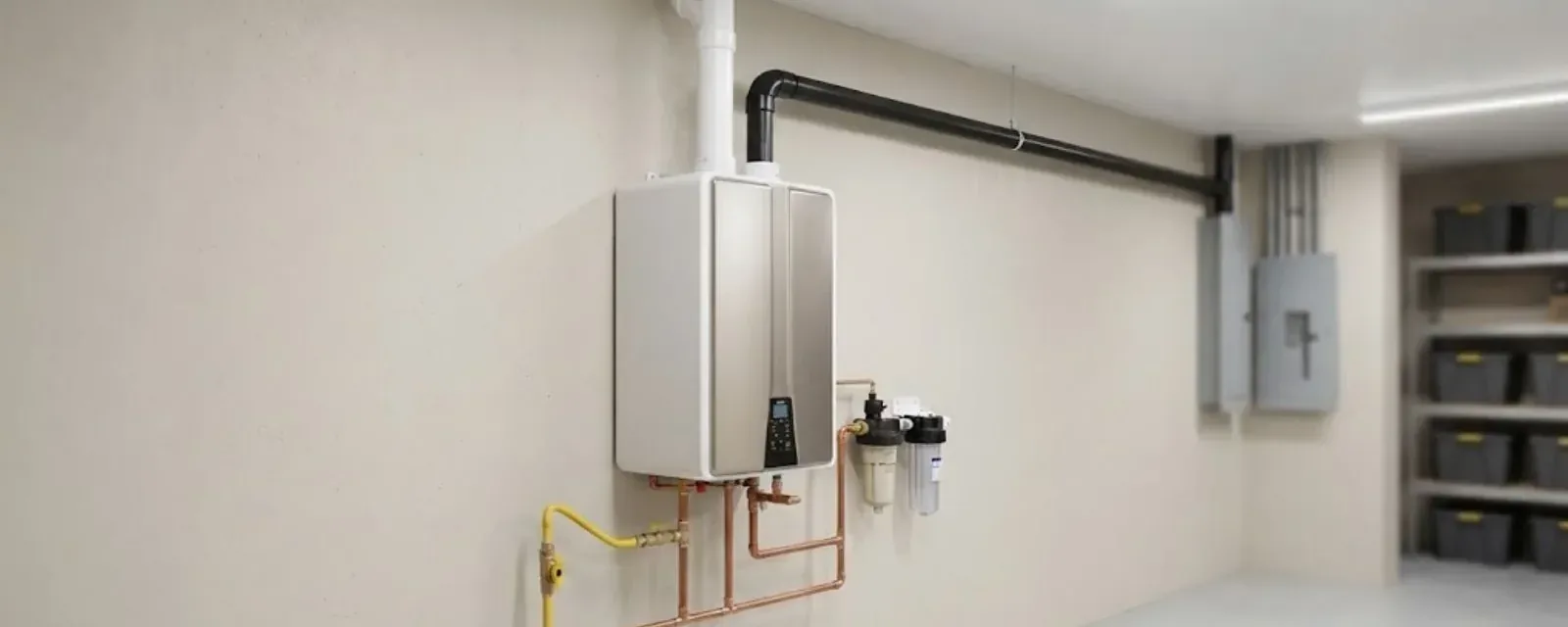
A tank swap is mostly like-for-like. A tankless install is a change in how hot water is made. The unit hangs on a wall, burns a large burst of gas, vents through a sealed pipe and needs power for its electronics.
Each of those is a separate piece of work. A house with a large gas line near the wall and a short vent run costs less to convert than one that needs a new gas line and a long vent through a finished room.
What a complete quote should list
Use this table as a checklist when quotes come in.
| Line item | Why it matters | Question to ask |
|---|---|---|
| Unit model and capacity | Flow rate decides if it meets demand | How many fixtures can it run at once? |
| Gas line | Tankless needs a larger supply | Is the existing line big enough? |
| Venting | Sealed venting is specific to the unit | What material and what route? |
| Water connections | Isolation valves make flushing easy | Are service valves included? |
| Condensate drain | High efficiency units produce condensate | Where does it drain? |
| Electrical | The unit needs a powered outlet | Is a new circuit or outlet needed? |
| Permits and inspection | Required for gas and venting work | Who pulls them? |
See our tankless water heater page for service and flushing.
The gas line question
A tankless heater can draw many times the gas a tank-style heater uses at its peak. A half-inch line that serves a furnace, range and dryer may not carry enough.
A plumber should size the line against the unit's rating and the total load. If the line is too small, a quote that omits a new line is hiding a cost. Ask for the gas pipe size, length and the calculation behind it.
Venting and combustion air
Tankless units use sealed venting made for the unit. The route to the outdoors sets the labor. A short run through an exterior wall is straightforward. A long run through finished ceilings or joists is not.
Combustion safety matters. After installation, the plumber should test for proper draft and carbon monoxide, and confirm the unit fires correctly. Ask how that test is done and whether you get a record of it.
Red flags in a tankless quote
Be careful with any quote that shows these signs.
- A single lump price with no breakdown.
- No mention of the gas line or venting.
- No isolation valves for future flushing.
- No permits or inspection listed.
- A unit chosen without asking about your fixtures or household.
- Pressure to sign the same day.
A good quote explains itself. If you cannot follow it, ask.
Sizing the unit to your home
A unit is sized by the flow rate it can deliver at your incoming water temperature. A house with three showers running at once needs a different unit from a one-bath apartment.
Incoming water is colder in winter, which reduces the flow a unit can heat. A quote should be based on your coldest conditions, not summer ones.
How to compare three quotes
Do this for each bid and lay them side by side.
- List the modelWrite down the brand, model and rated flow.
- Check the gas lineNote whether new pipe is included and its size.
- Check the ventNote the material, route and wall penetrations.
- Check valves and drainsConfirm service valves and the condensate drain.
- Check permits and warrantyConfirm who handles permits and what the warranty covers.
Warranty, service and the long view
Tankless heat exchangers often carry a longer warranty than tanks, but the warranty may require an annual flush and proof of it. Ask what maintenance the manufacturer requires and whether the installer offers it.
Ask about parts. A unit with common parts is easier to repair years from now. Keep the model and serial number with your house records.
Comparing efficiency claims
Efficiency numbers vary by model, and real savings depend on how much hot water you use. A household with low use gains little, and a large household gains more. Ask the installer to explain the numbers in terms of your own use.
Retrofit issues in older Belleville homes
Older homes often have small gas meters, steel gas pipe that is long and narrow, and vent chases that were never meant for a sealed vent. Basements may have low ceilings and limited wall space for the unit. A walk-through catches these before they surprise you.
If the gas meter is the limit, the gas company must upgrade it. Call PSE&G at 1-800-880-7734 early, because that step can set the schedule.
Standards that shape a quote
New Jersey's plumbing subcode adopts the National Standard Plumbing Code Illustrated, 2021 edition, through N.J.A.C. 5:23-3.15. It sets the relief valve and drain rules. Gas and vent work follow the manufacturer's instructions and fuel gas rules, and a new circuit falls under the National Electrical Code (NEC).
Quick reference: what moves a tankless quote
We do not publish a flat rate, because the same unit can cost very different amounts to install.
- Gas line workA new or larger line adds material and labor.
- Vent routeLonger or harder routes cost more.
- Unit capacityHigher flow units cost more.
- Electrical and condensateNew outlets and drains add work.
- PermitsFees and inspections vary.
Insurance note: a tankless upgrade is a planned improvement and not an insurance claim. If your old tank failed and caused damage, ask your insurer before the tank leaves.
Want a clear quote? Call (973) 488-5410.