
Start with how your household uses hot water
Tank size comes from how many people shower, whether a soaking tub sits in the house, and how many fixtures run at once. A couple in a one-bath unit needs a different tank than a family of five with two bathrooms and a washer running.
We ask about peak demand, not just headcount. The first-hour rating on the label matters more than the gallon number in the name.
Rough sizing guide before we visit
Use this as a starting point. We confirm it against your actual fixtures and pipe layout.
| Household | Typical tank | Notes |
|---|---|---|
| One or two people, one bathroom | 30 to 40 gallons | Electric needs a larger tank than gas for the same demand. |
| Three or four people, two bathrooms | 50 gallons | Check first-hour rating for back-to-back showers. |
| 5 or more, or a large tub | 65 to 80 gallons or tankless | Tankless needs a properly sized gas line. |
| Two-family or small multi-unit | Separate unit per apartment | Shared tanks need clear shutoffs for each unit. |
Final sizing depends on the unit's first-hour rating, so bring the label from the old tank or a photo of it when you call.
Gas, electric or heat pump
Gas heats fastest and costs less to run than resistance electric in many homes, but it needs a flue and a gas line in good shape. Electric is simple to install but slow to recover in a big household.
Heat pump tanks use far less electricity and need open air space around them. In a tight Belleville basement utility closet that clearance can be the deciding factor, so we measure before recommending one.
What a proper install includes
Price comparisons only make sense if the work is the same. This is our standard scope.
- New water supply connections and shutoff valves on the cold and hot lines.
- A temperature and pressure relief valve with discharge piping run to a safe termination.
- An expansion tank where the plumbing is a closed system.
- A drain pan and drain line where a leak would reach finished space.
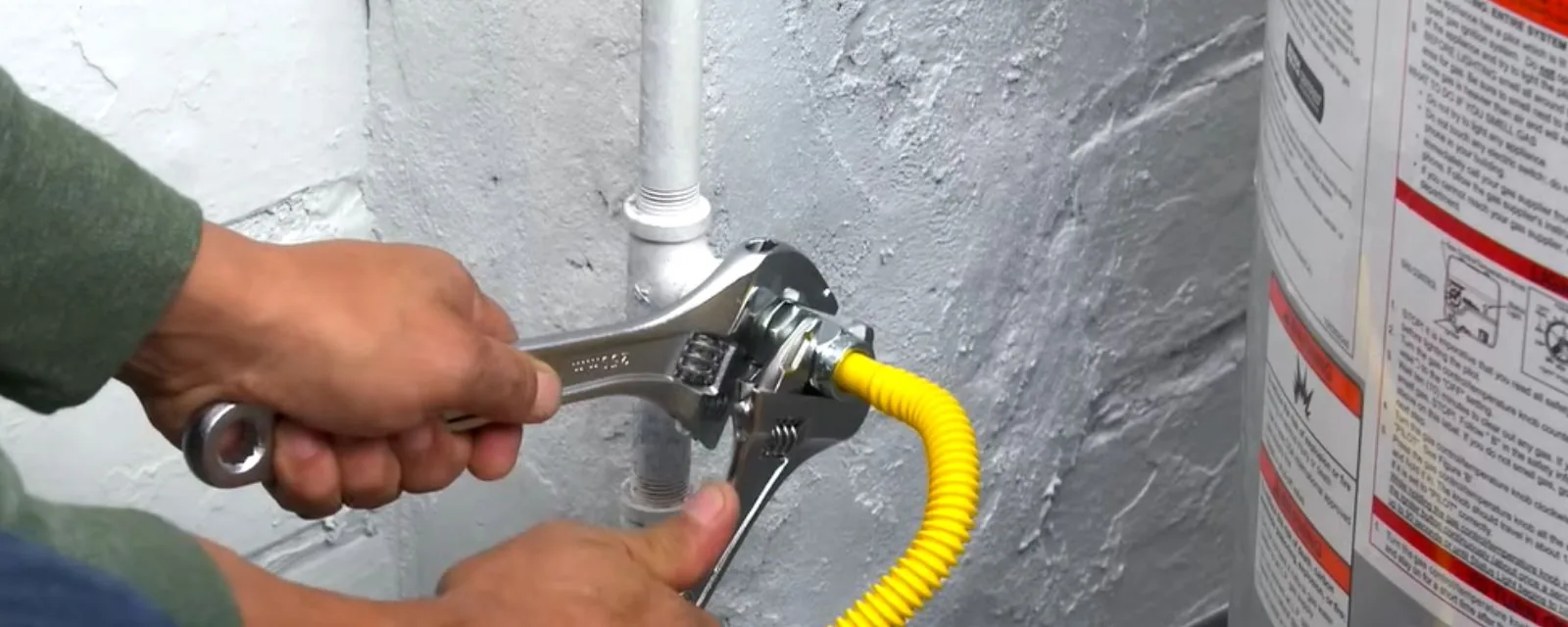
- Gas connector, sediment trap and combustion safety test for gas units.
- Venting inspected or replaced to match the new unit.
Anything beyond this, such as a new gas line or a vent reroute, is quoted before it is done.
The code that governs the work
New Jersey's plumbing subcode adopts the National Standard Plumbing Code Illustrated, 2021 edition, through N.J.A.C. 5:23-3.15. A properly installed heater follows that code for relief valves, venting and clearances.
The same law says plumbing must be performed by a master plumber, an authorized plumbing contractor, or their employees. You can ask any plumber to show the license number that must appear on their invoice, then verify it with the State Board of Examiners of Master Plumbers.
Permit rules differ by job and municipality. The Belleville township office at 973-450-3300 can tell you what applies to your address.
Do you need a water softener with a new heater?
Probably not for hardness. Belleville's 2023 water quality report listed hardness at 48.7 ppm, about 2.9 grains per gallon. The USGS scale rates anything under 60 mg per liter as soft.
A softener adds salt, maintenance and drain discharge. Our advice is to test your tap before buying one, and ask the Belleville Water Department at 973-450-3414 about the latest annual report. If your tap tests soft, spend the money on the heater instead.
How an install day goes
Planned installs run more smoothly than emergencies because the parts are on the truck before we arrive.
- Walk-throughWe check the space, the shutoffs, the gas line and the vent, then confirm the quote.
- InstallThe old unit is drained and removed, and the new one is set level on a pan with new connections.
- CommissionWe fill, purge air, fire the unit, test the relief valve and measure the outlet temperature.
- Hand-offWe show you the shutoffs, set the temperature, and explain the flush schedule.
Caring for the new unit
A new heater needs little, but it needs it on time. Flush a tank once a year to clear sediment, and test the relief valve by lifting its lever briefly. Check the area around the base for moisture each season.
What changes the cost of a new installation
We give you a clear price before work starts, and the same scope for every option.
- Unit typeStandard, tankless and heat pump units sit in different price tiers.
- Fuel and venting changesA switch from gas to electric, or a new vent path, adds labor.
- Gas line and electrical capacityA tankless unit may need a larger gas line, and a heat pump may need a new circuit.
- Space and accessA tight utility closet or a flight of stairs adds time.
- Permits and disposalAsk the township which permits apply. Disposal of the old unit is part of the job.
Insurance note: an installation upgrade is not an insurance claim. A failed old tank may be treated as wear, so ask your insurer before the old unit goes out.
Want your real number? Call (973) 488-5410 and we will schedule a walk-through.
Questions Belleville homeowners ask about water heater installation
A like-for-like tank swap usually takes a few hours. A fuel change, vent reroute or tankless install takes most of a day, and we confirm the time when we quote.
Yes. Removal and disposal are part of the install, and we cap and test every connection before leaving.
It can be, if the gas line is large enough and you value endless hot water over the higher upfront cost. See our tankless water heater page for the trade-offs.
Yes. Our line runs 24/7. We schedule same-day appointments when the calendar allows and give you the shutoff steps while you wait.
If your water supply has a backflow preventer or pressure reducing valve, the system is closed and thermal expansion has nowhere to go. An expansion tank protects the heater and fixtures.
Yes. Our dispatch covers Nutley and Bloomfield, and the same install standards apply.