
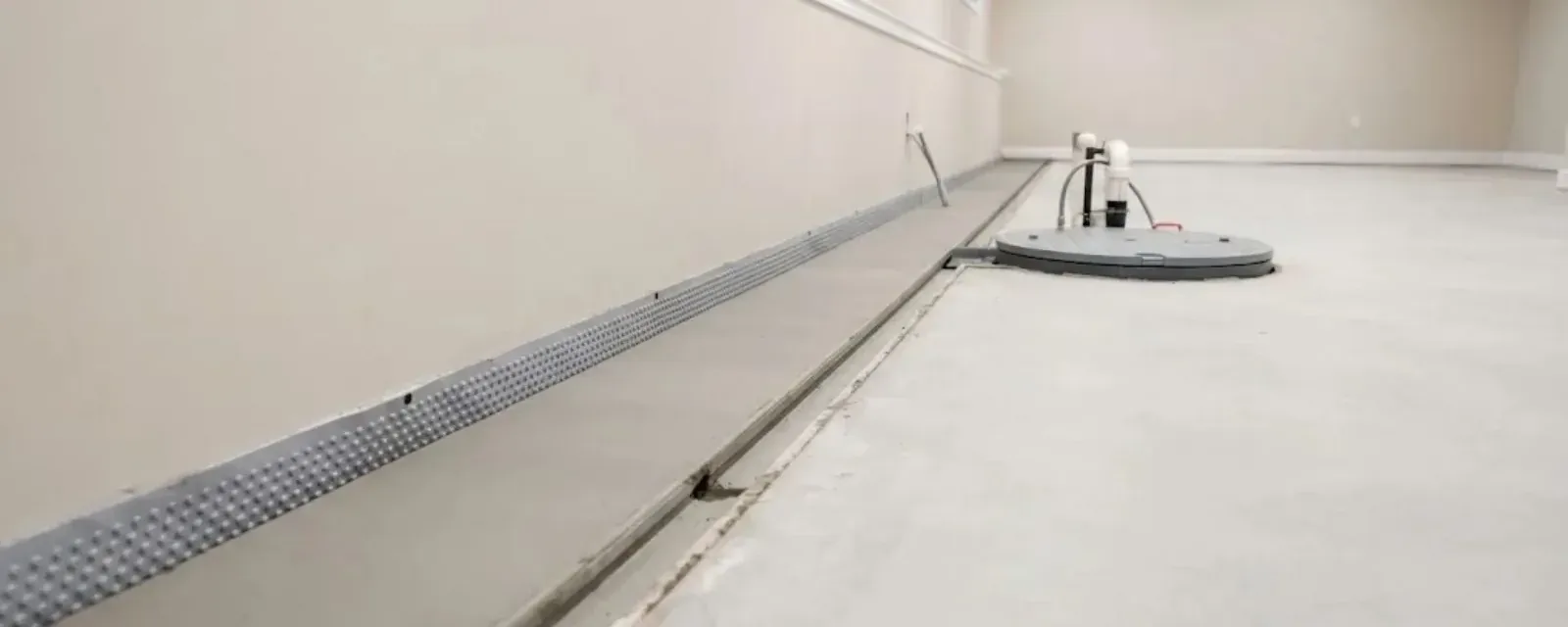
What interior waterproofing means
An interior system collects water where the wall meets the floor, then carries it to a sump pit where a pump sends it outside. A drain channel is set along the footing, covered with stone and capped with new concrete. Water that seeps in is guided into the channel instead of spreading across the floor.
Because the work happens inside, it avoids digging up the yard. That is a big advantage on narrow Belleville lots where the house sits close to the property line.
The tradeoff is that interior drains do not stop water from touching the wall. They manage it. For a wall that leaks badly through a single crack, other methods may suit better.
What a complete interior bid should list
If a bid does not list these items, ask why.
| Item | What it does | Question to ask |
|---|---|---|
| Perimeter drain | Collects water at the footing | How many linear feet, and which walls? |
| Sump pit and pump | Removes collected water | New pit or existing? What pump and what warranty? |
| Battery backup | Runs the pump in an outage | Is it included, and what battery type? |
| Discharge line | Carries water outside | Where does it end, and does it avoid the sewer? |
| Wall treatment | Directs wall seepage to the drain | Is a vapor barrier or baffle included? |
| Concrete patch | Restores the floor | Is it finished flush, and is sealing included? |
Our basement waterproofing page explains the other methods.
The factors that drive the price
Wall length is the first driver. A drain that runs along two walls costs far less than one that wraps the whole basement. A good contractor measures and says which walls need drainage and which do not.
The pump system is the second driver. A primary pump alone is cheaper than a primary pump with a battery backup and an alarm. In low-lying areas near the Second River, a backup is worth considering, because storms often take the power out when the water is highest.
Finish work is the third driver. If the basement is finished, drywall and flooring along the wall may need to come out and be replaced. The bid should say who handles that, and whether it is in the price.
Questions that separate a solid bid from a vague one
Take these questions to every contractor you consider.
- Did you find where the water enters before proposing a system.
- Is the plumbing ruled out as the source of the water.
- How many linear feet of drain are you proposing and why.
- What happens if the pump fails during a storm.
- Who patches the floor and walls, and when.
- What does the warranty cover and who stands behind it.
A contractor who cannot answer these should not get the job.
Check the plumbing first
Not every wet basement is a groundwater problem. A leaking supply pipe, a failing drain stack or a slow water heater leak can all put water on the floor. If that is the cause, a waterproofing system will not fix it.
Our leak detection service rules plumbing in or out before you spend money on drainage. We tell you honestly when the answer is groundwater and when it is a pipe.
Gutters, grading and downspouts
Many basements flood because roof water is dumped beside the foundation. A downspout that empties at the base of the wall sends hundreds of gallons into the soil during a heavy rain.
Extend downspouts several feet from the house, clean the gutters twice a year, and check that the soil slopes away. These steps cost little, and they can reduce the load on any interior system. Do them first, whatever else you decide.
How an interior installation unfolds
Knowing the sequence helps you plan around the work.
- Inspection and planThe contractor measures, finds entry points and writes the scope.
- Floor cutA strip of floor along the wall is cut and removed.
- Drain and pitThe channel, stone and pit are set, and the pump is installed.
- Discharge and testThe discharge line is connected, and the system is tested with water.
- Concrete and cleanupNew concrete is poured and the area is cleaned.
Warranties and what they really cover
A transferable warranty can help when you sell. Read it for what it covers. Some cover the drain and pump, others cover only the labor, and some exclude damage from power failure. Ask what you must do to keep it valid, such as annual pump service.
Safety steps while the basement is wet
Stay out of standing water that could reach outlets or the panel. Turn off power from dry ground only, wear boots and gloves, and ventilate. Use ground-fault protected outlets for any pump or vacuum, as the National Electrical Code (NEC) requires in damp areas. New Jersey's plumbing subcode adopts the National Standard Plumbing Code Illustrated, 2021 edition, through N.J.A.C. 5:23-3.15.
Quick reference: what moves the price
Instead of a flat number that could mislead, here is what changes a bid.
- Linear feet of drainMore wall means more material and labor.
- Pump and backupA backup and alarm add equipment.
- Finished or unfinished basementFinished walls and floors add demolition and restoration.
- AccessTight stairs and low ceilings slow the work.
- PermitsAsk the township which permits apply.
Insurance note: seepage and groundwater damage are usually excluded from homeowners policies, though sudden pipe failures may be covered. Read your declarations page before you rely on coverage.
Need a diagnosis before you buy a system? Call (973) 488-5410.