
Find the source before choosing the fix
Water gets into a basement in a few ways: through cracks in the wall, up through the floor, over the top of the foundation, or from plumbing. The fix for each is different.
We check for plumbing leaks first, so you do not pay for waterproofing when a pipe is the problem. See leak detection if we suspect that.
Waterproofing methods and what each does
No single method fits every house.
| Method | What it does | Best fit |
|---|---|---|
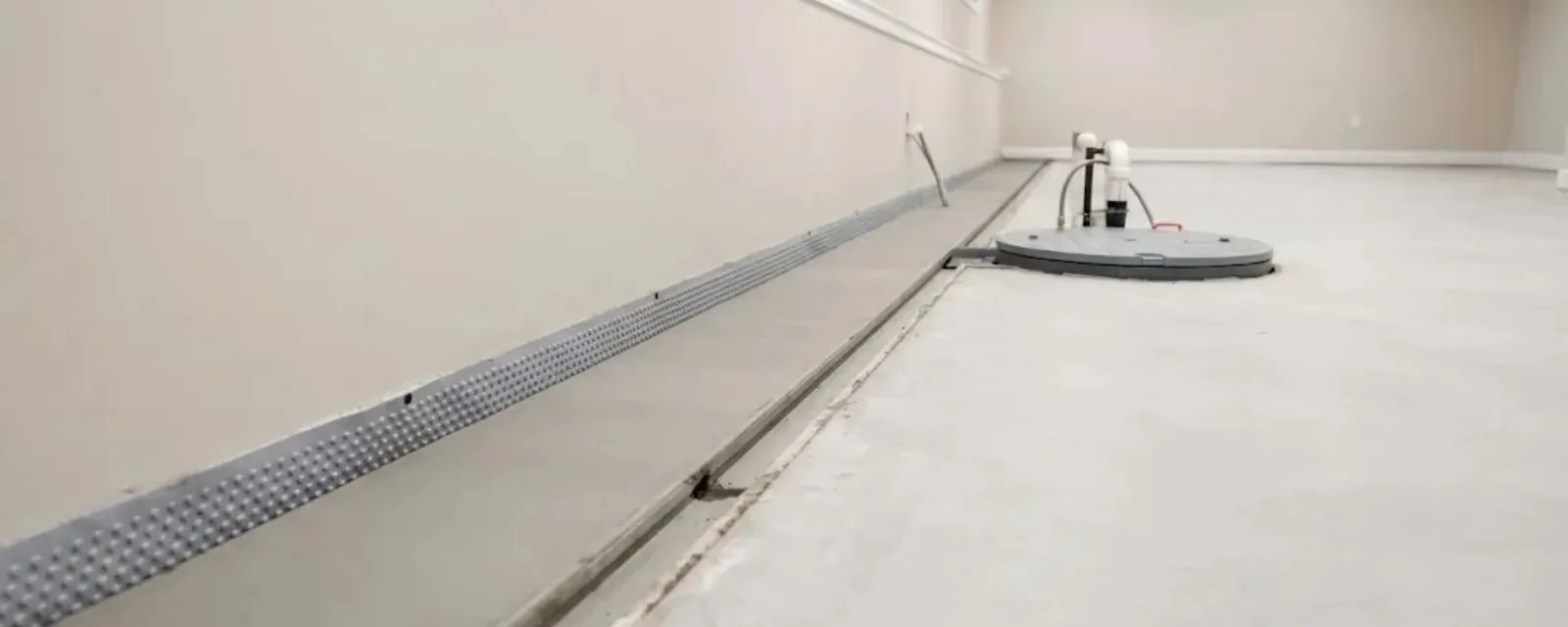
| Interior drain and sump | Collects water at the footing and pumps it out | Seepage at the floor-wall joint and rising groundwater. |
| Crack injection | Seals a single crack with epoxy or polyurethane | Isolated cracks in poured walls. |
| Exterior waterproofing | Excavates and seals the outside of the foundation | Heavy wall leaks where excavation is possible. |
| Grading and gutters | Directs roof and surface water away | Water entering from the surface after rain. |
| Vapor barrier and dehumidifier | Controls humidity | Damp air without liquid water. |
Our sump pump page covers the pump side of an interior system.
Surface water and gutters first
A downspout that dumps beside the foundation can flood a basement more than a high water table. Extend downspouts several feet from the house and check that the ground slopes away.
These steps cost little and often reduce water enough that a larger system is not needed. We tell you honestly if gutters and grading can fix your problem.
Local conditions
Belleville sits near the Second River and the Passaic River, with older housing and finished basements common. Heavy rain raises groundwater, and low-lying blocks see more seepage.
Ask the Belleville township office at 973-450-3300 about permits and drainage rules before major excavation or grading changes.
Signs that point to waterproofing
Call when you see any of these.
- White chalky deposits on the wall.
- Water at the floor-wall joint after rain.
- A musty smell that returns after cleaning.
- Peeling paint or damp stains on the lower wall.
- Cracks that leak or widen.
- A pump that runs more often than it used to.
Take photos of the wall and floor after a rain to show us what you see.
How the work is planned
You see the plan and the price before work starts.
- DiagnoseWe inspect the walls, floor, gutters and plumbing.
- RecommendWe explain the methods that fit and what each would cost.
- InstallWe carry out the chosen method and keep dust and water contained.
- TestWe test the system and show you how it works.
What a good diagnosis visit covers
A diagnosis starts outside. We look at gutters, downspouts, grading and any cracks in the foundation wall. Inside, we check walls, the floor-wall joint, drains, the water heater, the boiler and every visible pipe.
We ask when water appears. Water after rain points to groundwater or surface runoff. Water that appears on dry days points to plumbing. Water that wicks up the wall and leaves white powder points to moisture moving through masonry.
Finished basements need extra care
A finished basement hides problems. Paneling, carpet and drywall trap moisture and grow mold out of sight. If you smell mustiness, open a small section of wall base and look.
Plan for restoration whichever method you choose. Interior drains need floor cuts, and wall repairs need new finish. Ask the contractor to say in writing who handles it.
What to do while your basement is wet: safety steps
Stay out of standing water if it could touch outlets, the panel or appliances. Turn off power at the breaker only from dry ground. Wear gloves and boots, ventilate the space and remove wet porous items within a day or two to limit mold.
Do not run extension cords through water. Use a wet vacuum or pump only on a ground-fault protected outlet, as the National Electrical Code (NEC) requires for damp areas. New Jersey's plumbing subcode adopts the National Standard Plumbing Code Illustrated, 2021 edition, through N.J.A.C. 5:23-3.15. Interior drainage must discharge outdoors, never into the sanitary sewer.
What changes waterproofing pricing
We give a clear price after we see the basement.
- MethodInterior drains, exterior excavation and crack injection differ widely.
- Linear feet of wallMore wall means more drain and more labor.
- Finished vs unfinishedFinished walls and floors add removal and restoration.
- Sump and backupPumps and backups add equipment.
- Access and permitsTight yards and permit needs add time.
Insurance note: seepage and groundwater damage are usually excluded from homeowners policies, while sudden pipe failures may be covered.
Want your real number? Call (973) 488-5410 and we will schedule a visit.
Questions Belleville homeowners ask about basement waterproofing
Waterproofing is planned work. If a basement is flooding right now, call us 24/7 and we respond to the emergency first.
A leak keeps flowing when it is dry outside. Ground water comes after rain. We test both.
It controls humidity but does not stop liquid water. We check which problem you have.
Yes. Interior drainage systems are common, and they manage water instead of stopping it at the wall.
A well-installed system with a maintained pump lasts for many years. Pumps and batteries need replacement on a schedule.
Yes. See Bloomfield.