Warning signs of a sewer line clog
A clog in the main line shows up in several drains at once. A toilet gurgles when you run the washer. The tub bubbles when you flush. The basement floor drain backs up.
Slow drains in more than one place, a sewer smell in the yard and wet spots over the line are the other common signs. Treat them seriously, because a full blockage sends sewage into the house.
Causes of sewer line clogs
The cause decides the fix.
| Cause | How it forms | Usual repair |
|---|---|---|
| Tree roots | Roots enter joints and cracks and grow | Cut and jet, then reline or repair. |
| Grease | Fats cool and harden on the pipe wall | Jetting and prevention. |
| Flushed items | Wipes, towels and toys catch in the line | Retrieve and clear. |
| Bellied pipe | Soil settles and the pipe sags | Section replacement. |
| Offset or broken joint | Pipe sections shift apart | Spot repair or lining. |
| Collapsed pipe | Old pipe fails under soil load | Replacement. |
For what we do on arrival see sewer line cleaning.
Sewer backup: what to do first
If sewage is already coming up, act on safety.
- Stop all water use in the house.
- Keep children and pets away from the area.
- Do not use chemical drain cleaners.
- Open windows for ventilation if the smell is strong.
- Photograph the backup for your insurer.
Then call (973) 488-5410. Our line is open 24/7.
What a plumber does on arrival
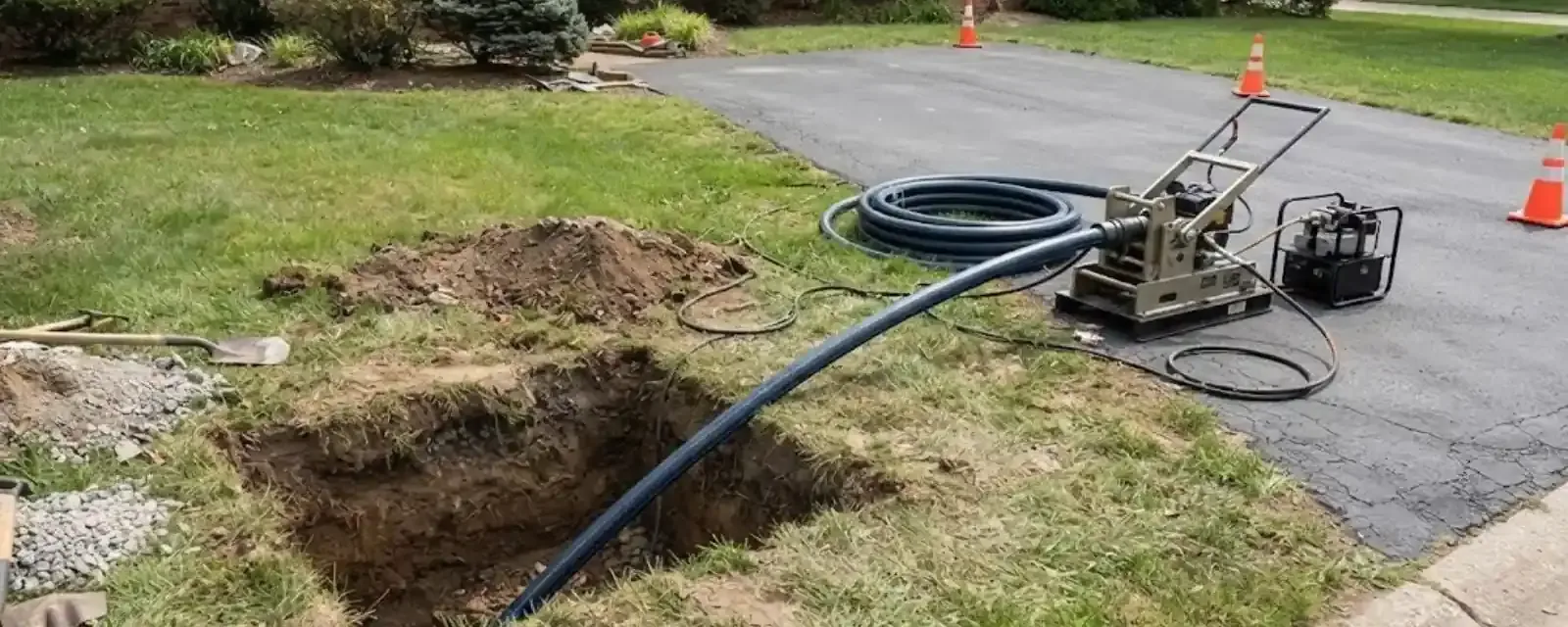
The first step is finding the access point, usually a cleanout near the foundation. A cable or jetter is then run into the line to clear the blockage.
After the line is open, a camera shows the pipe. That step is the difference between clearing a clog and fixing the reason it formed. If the camera shows a cracked joint or a belly, the plumber can explain the options before you decide.
Cable or jetter
A cable cuts through the clog and restores flow quickly. It is a good choice for a first-time clog from a flushed item. A hydro jetter uses high-pressure water to scour the pipe wall and wash out grease and roots.
For repeat clogs, jetting usually lasts longer. See hydro jetting for when we recommend it. We do not jet a pipe that a camera shows to be cracked or collapsed.
How to prevent the next clog
Prevention costs very little.
- Put grease and cooking oil in the trash, not the sink.
- Flush only toilet paper and human waste.
- Use drain screens in tubs and showers.
- Have older lines cleaned or inspected on a schedule.
- Keep large trees away from the line, or plan for root control.
- Keep the cleanout accessible and capped.
A yearly camera or jet cleaning helps older lines near large trees.
From clog to long-term fix
A good job follows this path.
- Clear the lineCable or jet the blockage until water flows.
- Camera the pipeCheck the condition and find the cause.
- Explain optionsMaintenance, lining, spot repair or replacement.
- DecideYou choose the plan before any digging.
See sewer line repair when the camera shows damage.
Why some clogs return in the same place
A clog that returns in the same spot is rarely bad luck. Something about the pipe at that spot catches waste: a belly that holds water, a joint that has shifted, a root entry point or a rough patch of scale. Clearing it only resets the clock.
A camera pass shows which one it is. Once the cause is known, the repair can be targeted, such as cutting roots and lining the joint, or replacing a short section.
Warning signs before the next backup
Gurgling in a toilet after the washer drains, a faint sewer smell in the basement, slow drains that clear and then slow again, and a damp patch in the yard are all early signs. Treat them as a prompt to book a camera visit.
Catching a problem at this stage often means a cleaning and a plan, instead of an emergency visit at night with sewage on the floor.
What not to do while waiting for help
Do not run the washer or dishwasher to see if the drain clears. Do not pour boiling water into a cracked or old pipe. Do not mix cleaners, because the fumes can be dangerous. Do not stand in standing sewage near live outlets.
Do open a window, keep children away and write down which fixtures are affected. That information helps the plumber find the blockage faster.
After the line is open
Ask for the camera footage and a short summary. Ask how often the line should be maintained. Set a reminder to book a check in six to twelve months if roots or grease were involved. A short visit once a year costs less than a weekend backup.
Standards and utility marking
New Jersey's plumbing subcode adopts the National Standard Plumbing Code Illustrated, 2021 edition, through N.J.A.C. 5:23-3.15. Any replaced section must meet its slope and cleanout rules. Call 811 before any dig.
Quick reference: what moves the price
We quote before work starts.
- AccessA cleanout makes the job faster.
- Tool neededA cable and a jetter are priced differently.
- SeverityHeavy roots and packed grease take longer.
- Camera follow-upA look afterward adds time and prevents repeats.
- TimingNight and weekend calls cost more.
Insurance note: most homeowners policies do not pay to clear a clog, and backup damage usually needs a water backup endorsement.
Backed up now? Call (973) 488-5410.