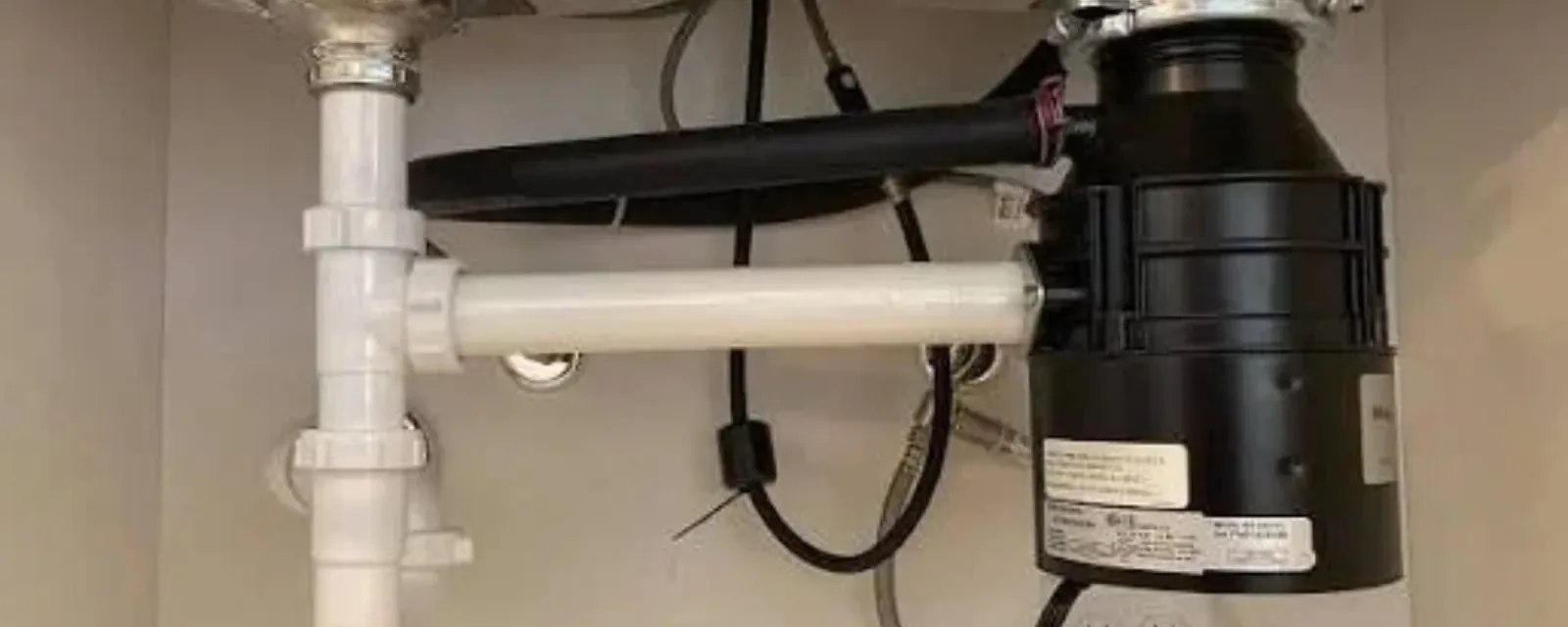
The drain path from sink to wall
Water leaves the sink through the strainer flange and enters the disposal. From the disposal, a discharge elbow sends it to the trap arm and then to the P-trap and the wall drain. The dishwasher drains into the disposal through a hose.
Each joint has a washer or gasket, and each pipe has to slope toward the wall. When the slope is wrong or a joint is loose, water backs up or leaks at the cabinet floor.
Parts of a kitchen sink drain
Knowing the parts helps you describe a problem on the phone.
| Part | What it does | Common problem |
|---|---|---|
| Sink strainer flange | Seals the sink to the disposal | Dry putty and leaks around the rim. |
| Garbage disposal | Grinds food waste | Jams, leaks, motor failure. |
| Discharge elbow | Connects the disposal to the trap | Loose gasket. |
| P-trap | Holds a water seal against sewer gas | Clogs, loose slip nuts. |
| Trap arm | Carries waste to the wall | Wrong slope, sags. |
| Dishwasher hose | Drains the dishwasher into the disposal | Kinks, unremoved knockout plug. |
For disposal problems see garbage disposal repair.
Double bowl and single bowl layouts
A double-bowl sink usually has one bowl with a disposal and one with a plain strainer. A tailpiece from the second bowl joins the disposal side through a branch fitting before the trap.
A single bowl is simpler. The disposal drains straight to the trap. Both layouts share the rule that the trap sits below the sink and the arm slopes down to the wall.
The dishwasher connection
A dishwasher drain hose connects to a nipple on the disposal. New disposals have a knockout plug in that nipple. If it is not removed, the dishwasher cannot drain and water backs up in the machine.
The hose should loop high under the countertop or run through an air gap before it reaches the disposal. That stops dirty water from flowing back into the dishwasher. Local code decides which method applies, so ask the township if you are unsure.
Common kitchen drain mistakes
These show up often in older homes and DIY jobs.
- A trap installed too far below or above the trap arm.
- A trap arm that slopes the wrong way.
- A dishwasher hose that runs straight down with no loop.
- A forgotten knockout plug.
- Flexible corrugated pipe used where smooth pipe belongs.
- A disposal that is not supported and strains the joints.
A plumber can fix most of these in one visit.
How to check your own layout
Run through this with a flashlight and a dry paper towel.
- Look under the sinkFind the disposal, trap and dishwasher hose.
- Check the slopeThe trap arm should drop slightly toward the wall.
- Check the hoseIt should loop high or reach an air gap.
- Run waterFill the sink, then release it and watch every joint.
- Run the dishwasherWatch for backflow into the sink.
When the clog is past the sink
Kitchen branches clog with grease more than any other drain. A cable can open the branch, and a jetter can scour it. If several drains in the kitchen or basement are slow together, the problem may be in the main line.
See sewer line cleaning for what a main line clog looks like and what we do about it.
Venting a kitchen sink
A drain needs air to flow. A vent lets air in behind the water so the trap seal is not pulled out. Without a proper vent, a sink gurgles and drains slowly. An air admittance valve is sometimes allowed where a conventional vent is hard to run, if local code permits.
If you are moving a sink or adding an island sink, the vent is the part that most often needs design. That is a job for a licensed plumber and may need a permit.
Small habits that protect the drain
Scrape plates into the trash. Run cold water while the disposal works and for a short time after. Pour cooled grease into a can. Once a month, flush the sink with hot water and dish soap. These habits cost nothing and prevent most kitchen branch clogs.
Replacing a leaking disposal drain
A leak at the side drain usually means a loose bolt or a worn gasket where the discharge elbow joins the disposal. Tighten the bolts a quarter turn at a time and check the rubber gasket for cracks. If the disposal body itself leaks, replace the unit.
After any repair, run water for a full minute and dry the joints. Check again the next morning.
Two-family houses and shared kitchen stacks
When two kitchens share a stack, a clog can show up in the lower unit first. If the downstairs sink backs up when the upstairs dishwasher runs, the shared stack is the likely culprit. Tell the plumber which unit is affected and which appliances were running.
Safety steps before you work under the sink
Switch off the disposal at the wall and the breaker, never put a hand inside the grind chamber and close both shutoff valves. New Jersey's plumbing subcode adopts the National Standard Plumbing Code Illustrated, 2021 edition, through N.J.A.C. 5:23-3.15. The trap, trap arm and dishwasher connection follow it, and disposal wiring falls under the National Electrical Code (NEC).
Quick reference: what moves a professional kitchen drain job
We quote before work starts.
- Repair or rebuildFixing a joint costs less than re-plumbing the drain.
- Pipe materialOld galvanized or cast iron needs more work.
- Disposal and dishwasherAdding or replacing either adds connections.
- AccessA cramped cabinet takes longer.
- TimingEvening and weekend visits cost more.
Insurance note: sudden water damage from a failed drain connection may be covered. A slow leak that rots the cabinet may not.
Need it fixed? Call (973) 488-5410.