Know what you are changing
There are two kinds of sink jobs. A replacement keeps the existing supply and drain locations. A new sink in a new spot needs new pipes, a vent and often a permit.
This guide covers a replacement. If you are moving a sink or adding one, the work changes from a repair to an installation, and the rules are stricter. See our plumbing installation page for that.
Tools and parts to gather first
Having everything ready avoids a mid-job trip to the store.
- Adjustable wrench and basin wrench for tight faucet nuts.
- Slip-joint pliers and a bucket for the trap.
- Plumber's putty or silicone, as the sink manufacturer directs.
- New braided supply lines in the right length.
- A new P-trap kit with washers if the old one is worn.
- Pipe thread tape for threaded connections.
- Towels and a flashlight.
Take a photo of the existing setup before you start so you can match it later.
Step by step: replacing a sink
Take your time and keep the water off until the end.
- Shut off the waterClose the two small valves under the sink. Open the faucet to drain the lines.
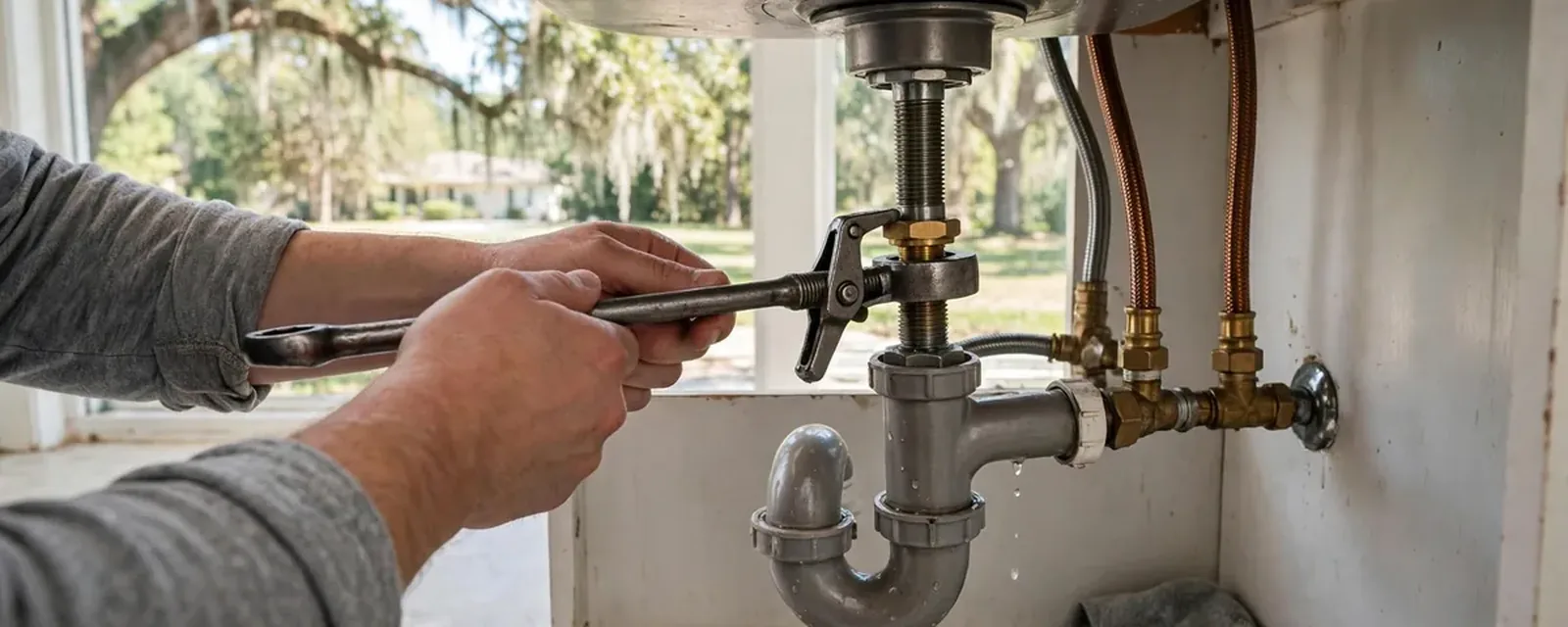
- Disconnect the drainPlace a bucket under the trap and loosen the slip nuts. Remove the trap and tailpiece.
- Remove the old sink or faucetDisconnect supply lines, release the mounting nuts and lift the unit out.
- Set the new sinkClean the opening, apply sealant as directed and set the sink or faucet in place.
- Connect the supply linesAttach new braided lines to the faucet and the shutoff valves, hand tight plus a small turn.
- Connect the drainInstall the strainer, then the tailpiece and trap, lined up without strain.
- TestOpen the valves slowly, run water, and check every joint with a dry paper towel.
Common leaks and where they come from
Most leaks after a sink job trace to a few spots.
| Where the water shows | Likely cause | Fix |
|---|---|---|
| At the slip nut on the trap | Washer out of place or nut loose | Reseat the washer and snug the nut. |
| At the faucet base | Missing seal or loose mounting nut | Reseat and tighten. |
| At the supply connection | Cross-threaded or loose nut | Remove, check threads, reconnect. |
| At the strainer | Not enough putty or gasket | Remove and reseal. |
| Under the shutoff valve | Worn valve stem | Replace the valve. |
For faucet issues that keep returning, see faucet repair.
The P-trap and why it matters
The P-trap is the curved pipe under the sink. It holds a small plug of water that blocks sewer gas from rising into the house. It also catches small items that fall down the drain.
If the trap is installed too low, too high or without a proper vent, it can siphon dry and let odors in. That is one reason new sink locations need a plumber who knows venting rules.
Slope and alignment
The drain must slope slightly toward the wall so water and waste flow away. Pipes that run uphill or sag collect debris and clog.
Line up the trap and tailpiece before tightening. A trap that is forced into place will leak over time. Plastic fittings are forgiving, but they still need straight alignment.
When a sink job is not a DIY job
Call a licensed plumber if the shutoff valves will not close, the supply lines are corroded or galvanized, the drain is cast iron or lead, or you need to move the sink. Those jobs often reveal larger problems behind the wall.
In New Jersey, plumbing work must be done by a licensed master plumber or their employees, with limited exceptions for owners working on their own homes. Ask the Belleville township office at 973-450-3300 what applies to your project.
Choosing the right supply lines
Braided stainless supply lines are flexible and easy to install. Pick the right length so there is a gentle curve and no kink. Avoid old rigid chrome tubes, which crack at the nut. Check the size of the shutoff outlet and the faucet inlet, since both vary.
Mistakes that cause callbacks
Overtightening plastic nuts cracks them and causes slow leaks. Skipping thread tape on threaded connections leaves weeping joints. Reusing an old compression washer on a new trap invites drips. Forgetting to run the water for a full minute before you declare success lets a slow leak go unnoticed.
Safety steps before you start
Close the shutoff valves, open the faucet to relieve pressure and switch off any disposal at the breaker before you reach into the cabinet. New Jersey's plumbing subcode adopts the National Standard Plumbing Code Illustrated, 2021 edition, through N.J.A.C. 5:23-3.15. It governs trap arm length, slope and venting for the drain you are connecting to.
Quick reference: what changes professional sink work
If you hire a plumber, these factors move the quote.
- Replacement or relocationMoving a sink costs far more than swapping one.
- Shutoff valve conditionSeized valves are replaced first.
- Pipe materialOld galvanized or cast iron needs special handling.
- Cabinet accessA cramped vanity takes longer.
- TimingAn evening call costs more than a weekday one.
Insurance note: a sudden leak from a failed supply line may be covered. A slow leak that has rotted the cabinet may not be. Photograph any damage first.
Want a plumber to do it? Call (973) 488-5410.