
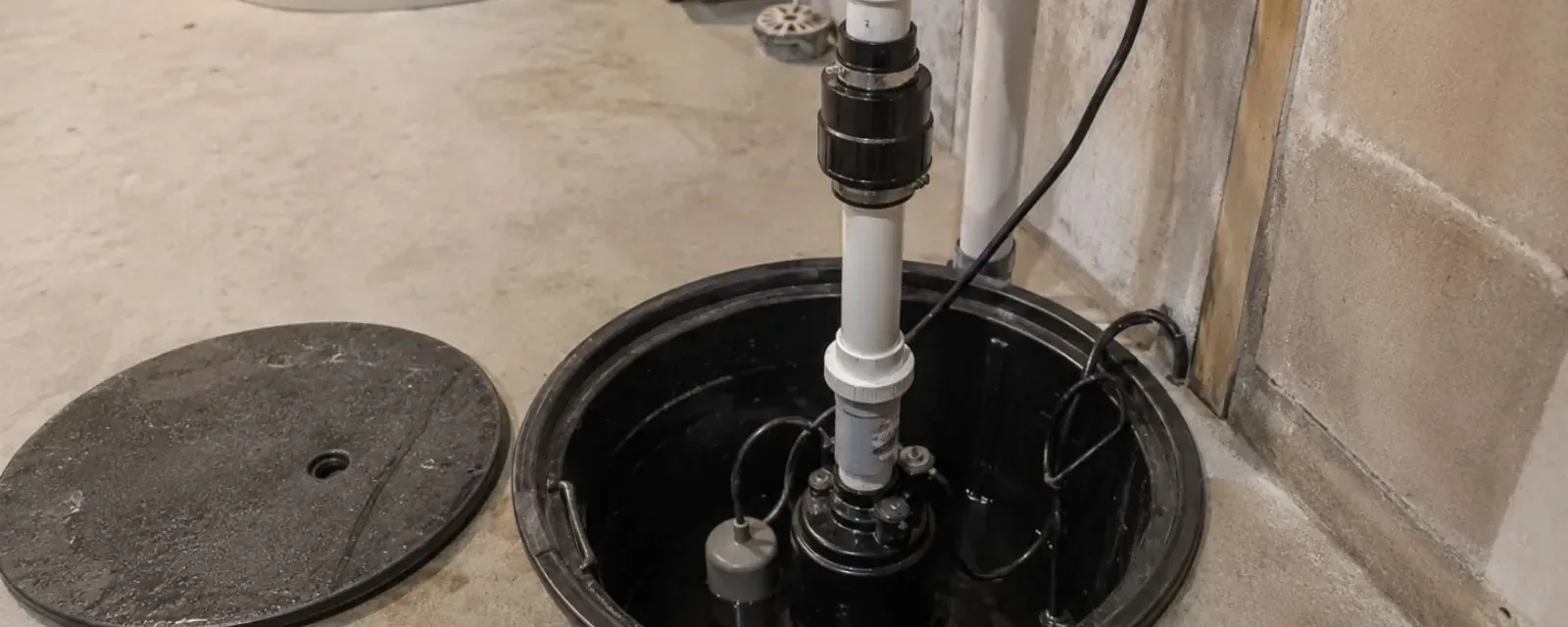
Why a primary pump alone is not enough
A standard sump pump runs on household electricity. Heavy storms often knock out power, and when the power fails, the pump stops. The basement is then at its most vulnerable, because rain is still falling and groundwater is still rising.
A backup system closes that gap. It senses when water reaches a higher level than the primary pump should allow, or when the primary pump stops, and takes over.
Types of backup systems
Three designs are common. Each has strengths.
| Type | How it works | Trade-off |
|---|---|---|
| Battery backup pump | A second pump runs from a deep-cycle battery | Needs battery care and replacement. |
| Water-powered backup | Uses municipal water pressure to move water | No battery, but uses water and needs adequate pressure. |
| Generator | Powers the primary pump | Needs fuel, setup and a transfer arrangement. |
| Combination unit | Controller, charger and pump in one kit | Higher cost, simple to operate. |
We help match the design to your pit, your inflow and your budget.
How long will a battery last
Run time depends on the battery size, the pump and how hard the pump has to work. A deep-cycle battery can run a pump for several hours of steady operation, and much longer if the pump cycles only now and then.
In a long outage with heavy rain, a single battery may not be enough. That is where a larger battery bank or a charger with a second battery helps. Be honest with yourself about how long outages last in your area.
What to look for when choosing a backup
These features make a real difference.
- A pump sized to handle the inflow of your pit, not just any small pump.
- A controller with an alarm that warns you when the battery is low or the pump fails.
- A separate float switch, so the backup does not depend on the primary.
- A smart charger that keeps the battery charged without overcharging.
- A check valve on the backup discharge line.
- A sealed or marine-grade battery rated for deep cycling.
Ask whether parts are standard and easy to replace in the future.
Pit size and discharge matter
A backup pump sits in the same pit as the primary. If the pit is small, the two pumps may not fit well, and the floats can tangle. A larger pit gives both pumps room to work.
The discharge line matters too. A second pump may need its own line or a combined line with proper check valves. Discharge should end outdoors, away from the foundation. Never route it to the sanitary sewer.
How to test a backup
Test it twice a year and before storm season.
- Check the batteryLook at the charger lights and the battery date.
- Fill the pitPour in water until the primary pump runs.
- Unplug the primaryLet water rise until the backup starts. Plug the primary back in.
- Check the alarmMake sure the controller sounds and shows the right status.
- Replace on scheduleMost batteries need replacing every few years. Mark the date.
If any step fails, call us before the next storm.
Common mistakes
Many backups fail because of simple oversights. The charger is unplugged, the battery is old, the float is stuck against the wall of the pit, or the discharge line is frozen or kinked.
A backup that has never been tested is a guess. Treat it like a smoke alarm, with a regular check on the calendar.
Alarms and monitoring
A backup that fails quietly is worse than none. Choose a system with an audible alarm for low battery, pump failure and high water. Some units add a phone alert, which helps if you travel.
Place the alarm where you will hear it, not in a basement corner behind a closed door. Test it at the same time as the pump.
Battery care and replacement
Deep-cycle batteries lose capacity with age and heat. Keep the battery on a raised shelf, in a cool spot, with the terminals clean. Write the install date on the battery with a marker.
After a long outage, check the charge and let the charger bring it back before the next storm. A battery that has been drained deeply several times will wear out sooner.
Where the backup pump sits in the pit
In a standard pit, the backup sits a few inches above the primary, so it starts only if the primary fails or cannot keep up. Floats must not touch each other or the pit wall. A pit that is too narrow may need a wider liner to fit both.
Safety steps and code
Keep chargers and controls dry and off the floor, use a ground-fault protected outlet as the National Electrical Code (NEC) requires in damp areas, and never run a generator indoors because of carbon monoxide. New Jersey's plumbing subcode adopts the National Standard Plumbing Code Illustrated, 2021 edition, through N.J.A.C. 5:23-3.15. Discharge must go outdoors.
Quick reference: what moves the price of a backup
We quote after seeing the pit.
- Backup typeBattery, water-powered and generator systems differ widely.
- Pump capacityA stronger pump costs more.
- Battery sizeLonger run time needs more battery.
- Pit and discharge workA new pit or new line adds labor.
- TimingA storm call costs more than a planned visit.
Insurance note: sump pump failure damage is often covered only with a water backup endorsement. Ask your agent before storm season.
Need a backup installed? Call (973) 488-5410.