
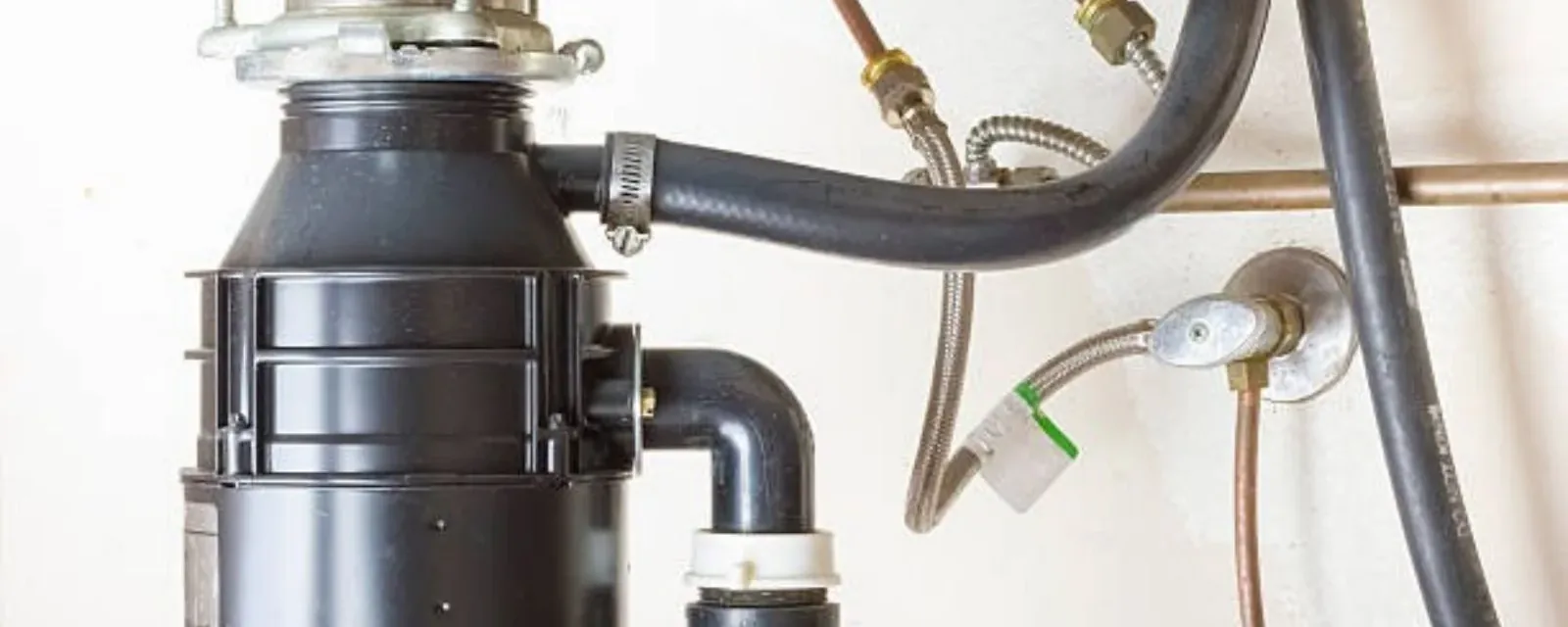
Replacement versus first-time install
If a disposal is already under the sink, the plumber removes the old unit, transfers the drain connections and mounts the new one. The mounting ring may be reusable, and the wiring is already in place.
A first-time install is different. The strainer flange in the sink must be replaced, the drain layout may need changes, a switch and outlet may be needed, and the dishwasher connection has to be planned. Each step adds time.
Disposal types and what they mean
The unit sets much of the price.
| Type | How it works | Good fit |
|---|---|---|
| Continuous feed | Runs while a switch is on, food added as it runs | Most homes. |
| Batch feed | Runs only with a stopper in place | Households with small children. |
| Basic horsepower | Smaller motor, more jams | Light use. |
| Higher horsepower | Stronger motor, quieter operation | Heavy use. |
For repairs see garbage disposal repair.
Horsepower and noise
A larger motor grinds tougher waste and jams less. It also costs more and may be heavier, which matters in a thin sink. Sound insulation is the other feature that raises the price. A quiet model is worth it in an open kitchen.
Pick for how you cook. A household that prepares large meals needs more than one that mostly rinses plates.
What a complete quote includes
Look for these items.
- The disposal unit, with model and horsepower named.
- A new mounting assembly if the old one is worn.
- A new drain gasket and discharge elbow.
- Connection to the dishwasher drain, with the knockout removed.
- Electrical hookup, plug or hardwired as local code allows.
- A test run and a leak check before the plumber leaves.
Ask what happens to the old unit. Most plumbers haul it away.
Electrical work
Many disposals plug into an outlet under the sink, controlled by a wall switch. Some are hardwired. If the outlet and switch are missing, an electrician or a plumber with the proper license must add them.
Ask who handles the electrical part. In New Jersey, plumbers and electricians are licensed separately, so a plumber may bring in an electrician for new circuits.
Drain condition matters
A new disposal does not fix a clogged drain. If the kitchen branch is slow, grease is the likely cause. Installing a new unit onto a clogged line only moves the problem.
We check the drain before installing, and clear it if needed. See drain cleaning for what that involves.
How an install visit runs
A replacement often takes a short visit.
- PrepareClear the cabinet and shut off power at the breaker.
- Remove the old unitDisconnect the drain, dishwasher hose and wiring.
- Mount the new unitAttach the ring and flange, set the disposal and secure it.
- ReconnectAttach the discharge, dishwasher hose and power.
- TestRun water and the unit, check all joints for leaks.
Choosing the right disposal for your household
A small household that cooks simply can get by with a basic model. A family that cooks daily benefits from a stronger motor and better sound insulation. Look at the grinding stages, the material of the grind chamber and the length of the warranty.
Stainless grind components resist corrosion better than coated parts. A unit with a lifetime-style warranty on the motor is worth reading closely, since terms differ.
Septic systems and disposals
If your home is on septic, ask a plumber or the septic service before adding a disposal. It adds solids to the tank and can shorten the pumping interval. Most Belleville homes are on the public sewer, but confirm yours if you are unsure.
After the install: first-week care
Run cold water for thirty seconds before and after each use. Avoid fibrous waste for the first week while you learn how the unit handles loads. Check the cabinet floor under the unit after a few days for any slow drip at the connections.
If you notice a leak or a hum that does not stop, switch the unit off and call. Early fixes are usually a quick tightening of a gasket.
Questions to ask the plumber before you hire
Ask whether the quote includes a new mounting assembly and discharge parts, or reuses the old ones. Ask who handles the dishwasher knockout plug and whether they test the dishwasher drain afterward. Ask what the labor warranty covers and for how long.
Ask how they will protect the cabinet floor and what happens to the old unit. A plumber who answers each of these plainly is likely to do tidy work.
When a disposal is not the answer
A disposal is not always the right choice. If your kitchen drain already clogs often, or the branch line is old cast iron, adding a disposal can make things worse. Composting food waste or scraping plates into the trash costs nothing and keeps grease out of the pipes.
We tell you honestly if your drain suits a disposal. If it does not, we fix the drain first.
Electrical and plumbing rules
New Jersey's plumbing subcode adopts the National Standard Plumbing Code Illustrated, 2021 edition, through N.J.A.C. 5:23-3.15. Disposal wiring is regulated by the National Electrical Code (NEC) and may need a licensed electrician if an outlet or circuit is missing.
Quick reference: what moves the price
We quote before work starts.
- Unit qualityMotor size, noise insulation and warranty raise the price.
- Replacement or first installA first install adds cutting and fittings.
- WiringA new outlet or switch adds work.
- Drain conditionA blocked branch needs cleaning.
- TimingEvening and weekend visits cost more.
Insurance note: a new disposal is a home improvement and not an insurance claim. A sudden leak that damages cabinets may be covered.
Want a clear price? Call (973) 488-5410.